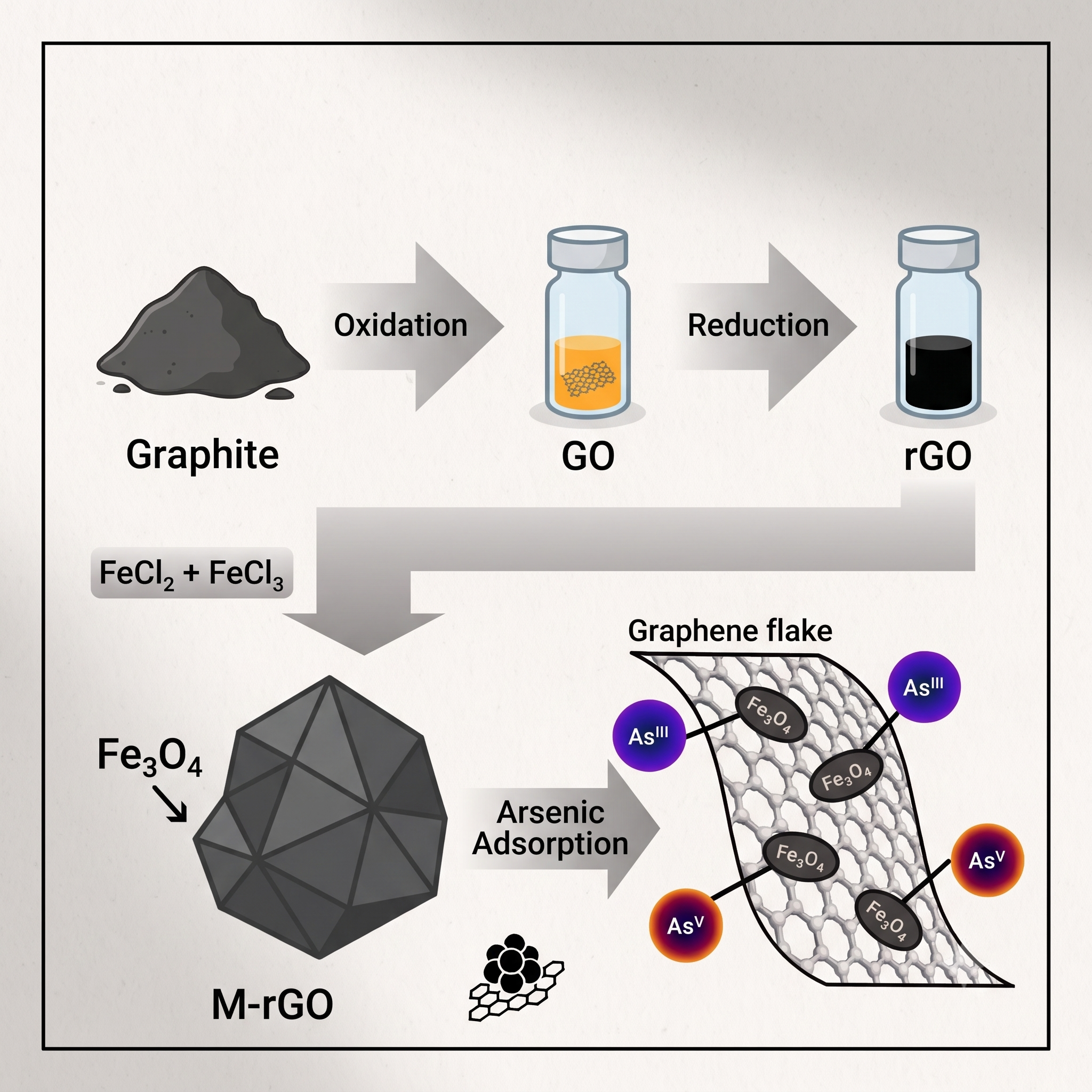
MrGO Synthesis
Magnetite reduced graphene oxide (MrGO) is the nanomaterial we use for our research, and we synthesize it ourselves at our labs. We start from graphite and using a modified Hummers method we first produce graphene oxide. And then, in an anaerobic glovebox, we turn it into raw magnetite reduced graphene oxide. Then through meticulous washing and drying in the vacuum oven, we get MrGO.
Batch experiments
With the MrGO we synthesized, Zero-Valent Iron (ZVI), and their combinations we conduct batch experiments in 250 mL reactors to better understand adsorption kinetics and equilibrium relations. These batch experiments are done with both As(III), As(V), synthetic groundwater, and real groundwater, and at different initial arsenic concentrations.

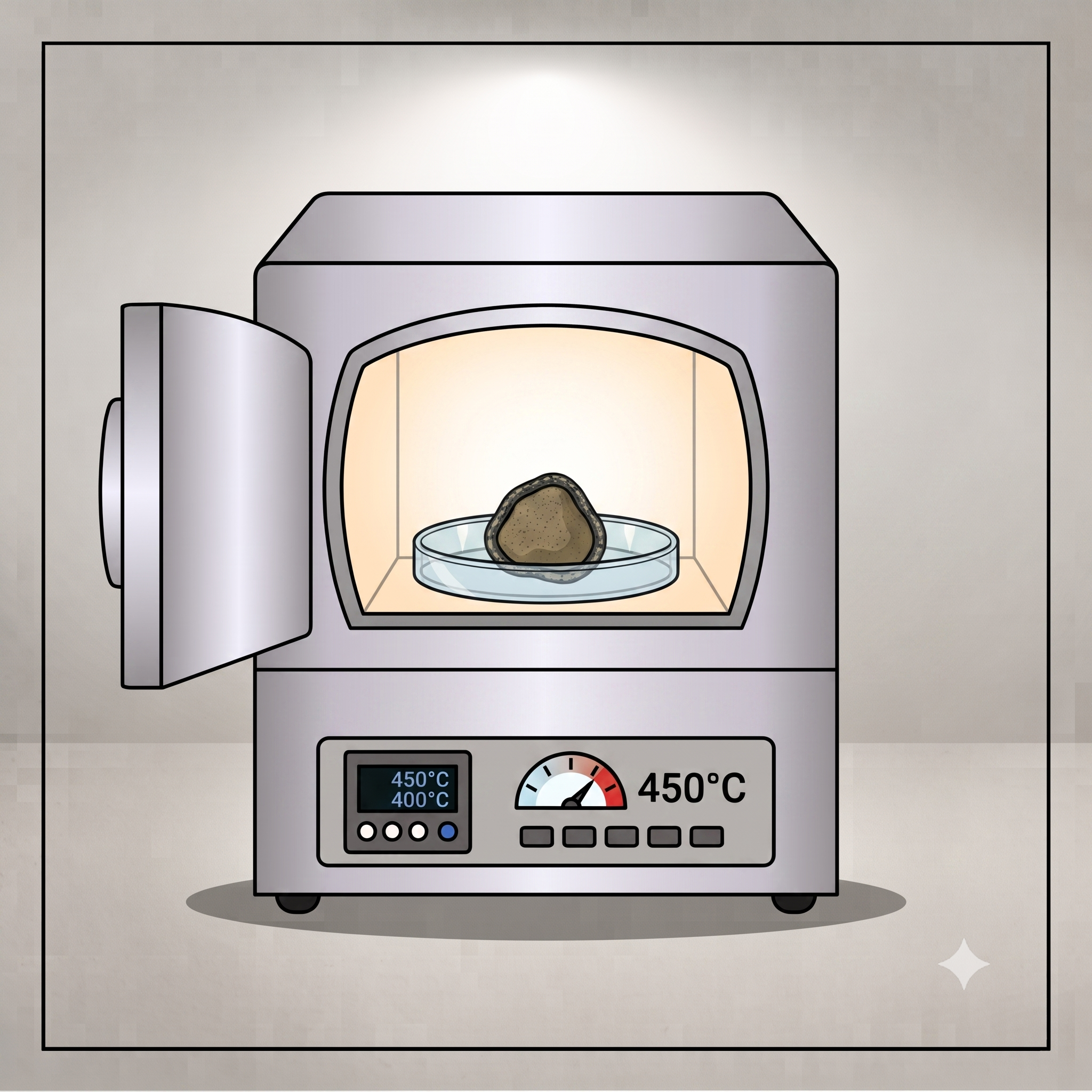
MrGO coating onto sand
To use MrGO which is nano-sized in a continuous flow column reactor, we need to have a support surface where it can be attached. Regular sea sand was chosen for the purpose, but a method for effectively placing MrGO onto sand particles needed to be devised. We developed an annealing method under high temperature with gradual cooling.
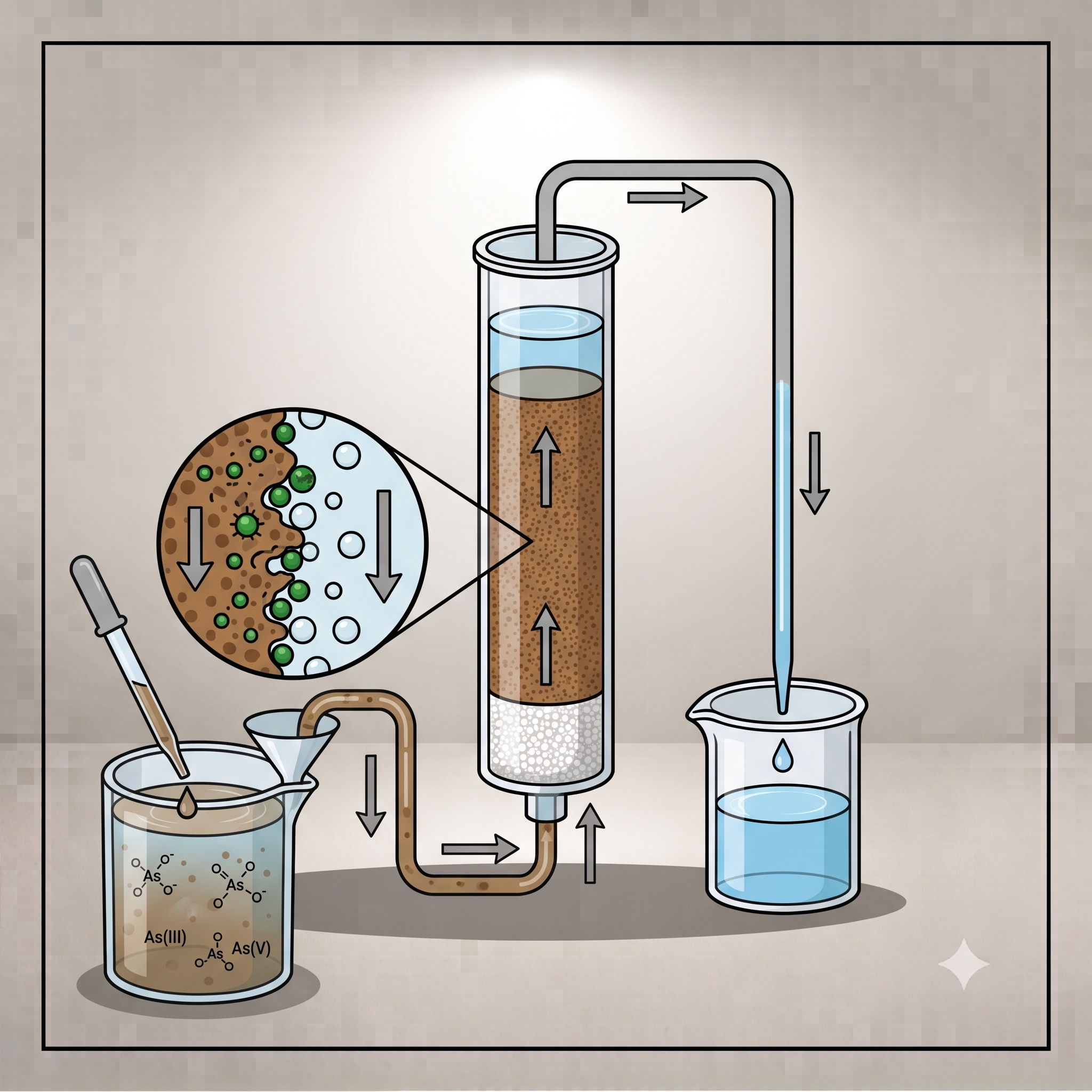
Column experiments
Continuous flow experiments done with columns of 30-cm length, and 2.5-cm diameter to observe conditions under which such materials can be used for larger scale applications. Columns are run under various conditions; high and low flowrate, different influent solutions (only As(III), only As(V), synthetic groundwater, real groundwater), different reactive media (an array of different MrGO-to-sand coating ratios, different ZVI contents, and different combinations of the latter two).
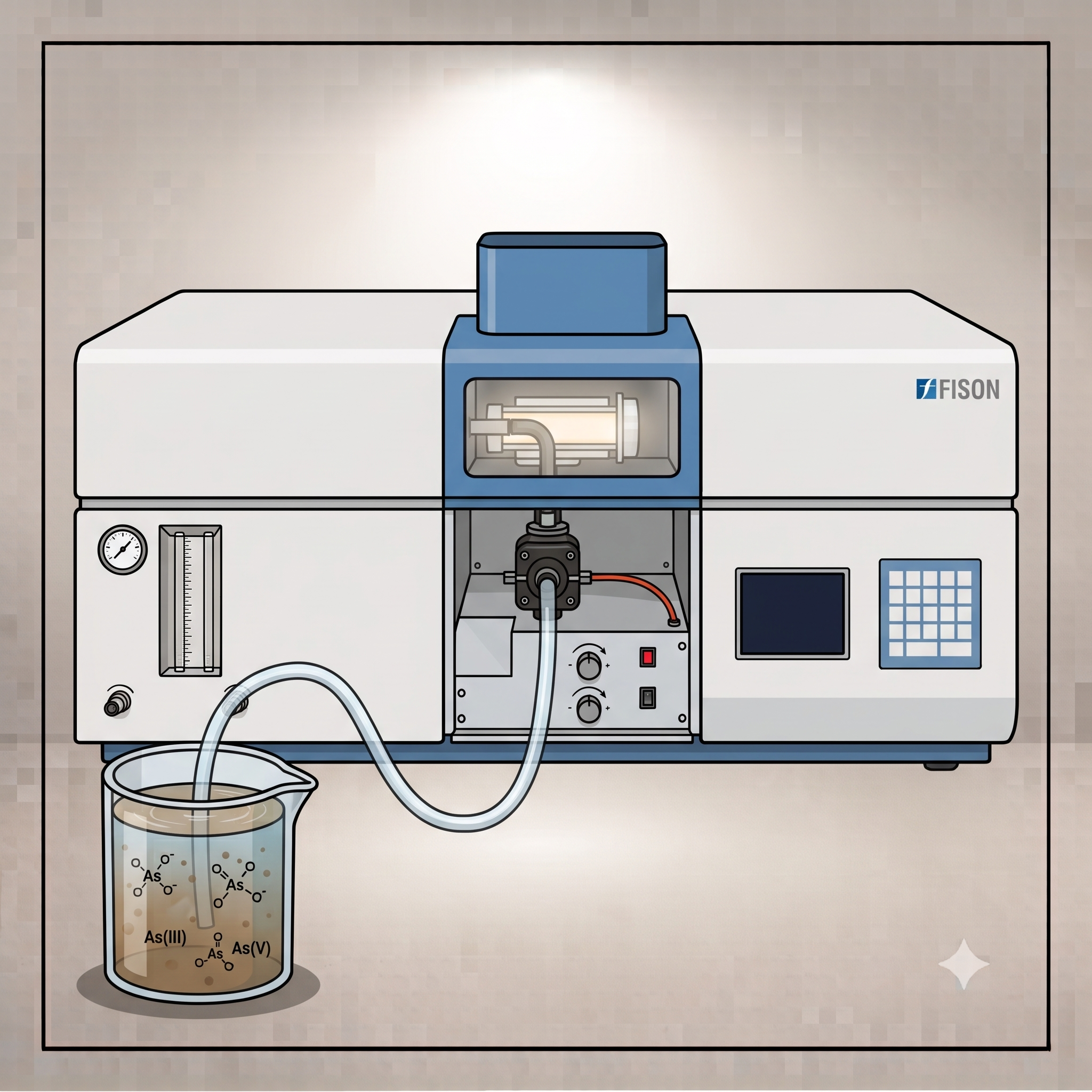
Arsenic speciation analysis
Arsenic does not stay in a single form in water, according conditions such as pH and ORP it may be in As(III) or As(V) form. The adsorption affinities of these two forms for our nanoadsorbent, MrGO, differs, and mechanisms of adsorption are also not the same for the two valency states of arsenic. That is why we are interest in the concentrations of arsenic in As(III) and As(V) in each sample. We developed a method of flow-injection, hydride-generation atomic adsorption spectrometry (FI-HG-AAS) to achieve these measurements.