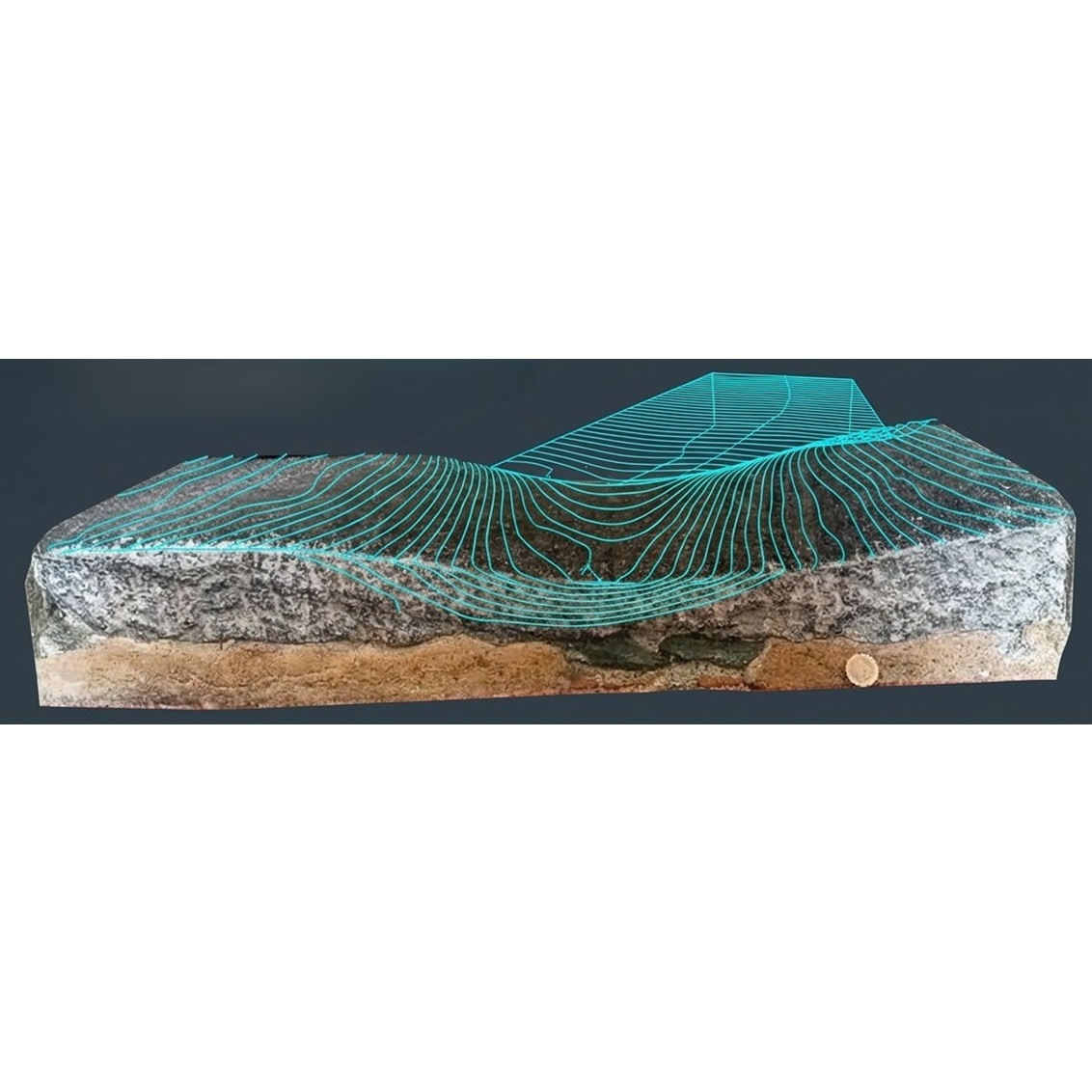
About
Testimony of Stones: A New Method in Ancient Traffic Analysis
Ancient stone pavements and threshold stones preserve physical traces of movement accumulated over centuries. This project proposes an interdisciplinary methodology to reconstruct ancient traffic intensity by combining rock mechanics, use-wear analysis, experimental archaeology, tribology, and agent-based modelling. Using case studies from Kerkenes (Iron Age Anatolia) and Ephesus (Hellenistic–Roman Anatolia), the project investigates how patterns of abrasion can reveal the frequency, duration, and nature of past movement. By transforming abraded stones into quantitative archaeological evidence, the project aims to establish a new research agenda linking movement studies, heritage science, and urban archaeology.
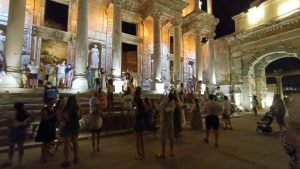
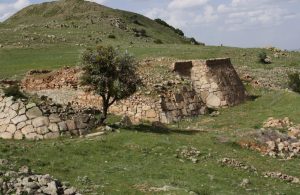
In 2024, the Ministry of Culture of the Republic of Turkey launched a night museology program covering many museums and ancient cities. In this context, the ancient city of Ephesus hosted approximately 2 million visitors last year (photo from Celsus Library) (left). City wall of Kerkenes (right).
Research question
Can traces or amounts of abrasion preserved on archaeological thresholds and paving stones be used to reconstruct the intensity, duration, and character of ancient pedestrian and vehicular traffic?
Sub-questions include:
- How does stone abrasion relate to the quantity and type of traffic passing over a surface?
- Can experimental and engineering methods provide reliable estimates of ancient movement intensity?
- How can archaeological, geological, and computational data be integrated to model traffic flows within ancient cities?
- Can such methods contribute to the protection and sustainable management of archaeological heritage sites exposed to modern visitor pressure?
From Abraded Stones to Movement Data
The project investigates archaeological thresholds and paving stones from two contrasting case studies:
• Kerkenes — a short-lived Iron Age urban settlement.
• Ephesus — one of the largest cities of the ancient Mediterranean.
The research workflow consists of four stages
1. Archaeological Context Analysis
• Integrating archaeological, environmental, and historical datasets.
2. Material Characterisation
• Petrographic analysis of stone materials.
• Identification of quarry sources where necessary.
3. Experimental Testing
• Böhme abrasion resistance testing.
• Schmidt hammer test.
• Ultrasonic pulse velocity measurements.
• Unit weight test.
• Experimental archaeology and use-wear replication studies.
4. Modelling
• Agent-Based Modelling (ABM) simulations.
• Testing different ancient traffic scenarios.
• Estimating pedestrian and vehicle densities through time.
Together, these methods will allow the project to quantify relationships between stone wear and urban movement.
Results and Conclusions / Expected Outcomes
(To be updated as the project progresses)
The project is expected to:
• Develop a replicable methodology for estimating ancient traffic intensity from stone wear.
• Produce quantitative models of movement in ancient cities.
• Improve understanding of urban organisation and public space use.
• Generate new datasets linking archaeological observations with engineering measurements.
• Provide practical tools for cultural heritage management and visitor impact assessment.
The results will demonstrate how architectural stones can serve as long-term archives of human behaviour and urban activity.