ADVANTAGES & DISADVANTAGES OF DISTANCE EDUCATION
Distance education, also known as online learning, has become a cornerstone of modern education, offering a flexible and technologically driven alternative to traditional classroom instruction. The growing adoption of digital platforms and e-learning tools has transformed how students access knowledge, engage with instructors, and interact with peers. While distance education provides significant benefits, it also presents challenges that must be carefully considered to ensure effective learning outcomes.
One of the most prominent advantages of distance education is flexibility. Unlike traditional classroom settings, online learning allows students to access lessons, assignments, and resources at any time, from virtually any location. This flexibility enables learners to tailor their study schedules around personal commitments, work responsibilities, or family obligations, making education more inclusive for diverse populations. Coupled with flexibility is the accessibility of distance education, which is particularly beneficial for students living in remote areas, different countries, or regions with limited educational infrastructure. Geographic barriers and travel constraints, which once limited educational opportunities, are significantly reduced, allowing a broader range of learners to pursue academic goals.
Another notable advantage is cost-effectiveness. Distance education often reduces expenses related to transportation, accommodation, and printed materials. Many courses rely heavily on digital resources, including e-books, recorded lectures, and interactive learning platforms, which are available 24/7, ensuring that students have constant access to educational materials. This continuous availability supports self-paced learning, allowing learners to progress at their own speed, review difficult concepts multiple times, and develop a deeper understanding of the subject matter. Self-paced learning encourages independence and responsibility, helping students cultivate strong time management and organizational skills.
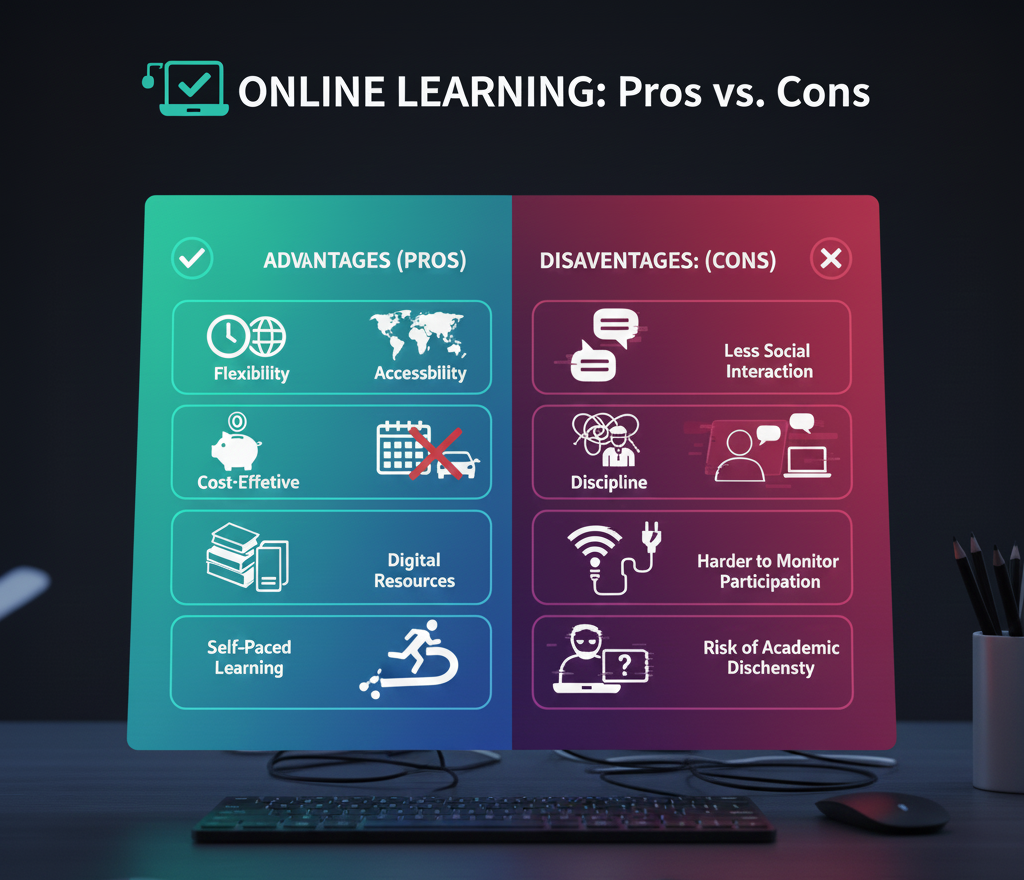
Despite these significant benefits, distance education is not without drawbacks. One of the primary challenges is reduced social interaction. Unlike traditional classrooms where face-to-face conversations and group activities foster interpersonal skills and collaboration, online learning often limits students’ opportunities to engage with peers in meaningful ways. This reduced interaction can affect motivation, engagement, and the overall sense of community within the learning environment. Moreover, online education requires a high degree of discipline and self-motivation. Without the structured environment of a physical classroom, students must manage their own schedules, adhere to deadlines, and maintain consistent study habits, which can be challenging for some learners.
Technical issues also pose a significant concern in distance education. Internet connectivity problems, software glitches, and platform outages can interrupt learning and prevent students from accessing critical resources or participating in assessments. These challenges may create frustration and hinder progress, particularly for learners in regions with unstable internet infrastructure. Additionally, monitoring student participation can be harder in an online environment. Instructors may struggle to identify passive students who are not actively engaging with the course content, making it difficult to provide timely support or interventions.
Finally, distance education introduces a risk of academic dishonesty. Online examinations and assignments can be harder to secure, increasing the likelihood of cheating or plagiarism. While various proctoring tools and plagiarism detection software exist, they are not foolproof, and maintaining academic integrity remains an ongoing challenge for educators.
In conclusion, distance education offers numerous advantages, including flexibility, accessibility, cost-effectiveness, and the ability for self-paced learning. These benefits make it an attractive option for a wide range of learners seeking convenient and personalized educational experiences. However, the disadvantages, such as limited social interaction, the need for self-discipline, technical challenges, difficulties in monitoring participation, and the potential for academic dishonesty, highlight the importance of implementing supportive measures. Successful online learning requires careful planning, robust technological infrastructure, and active engagement from both students and instructors to maximize the benefits while mitigating the drawbacks.
References
- Allen, I. E., & Seaman, J. (2017). Digital Learning Compass: Distance Education Enrollment Report 2017. Babson Survey Research Group.
- Moore, M. G., & Kearsley, G. (2011). Distance Education: A Systems View of Online Learning. Cengage Learning.