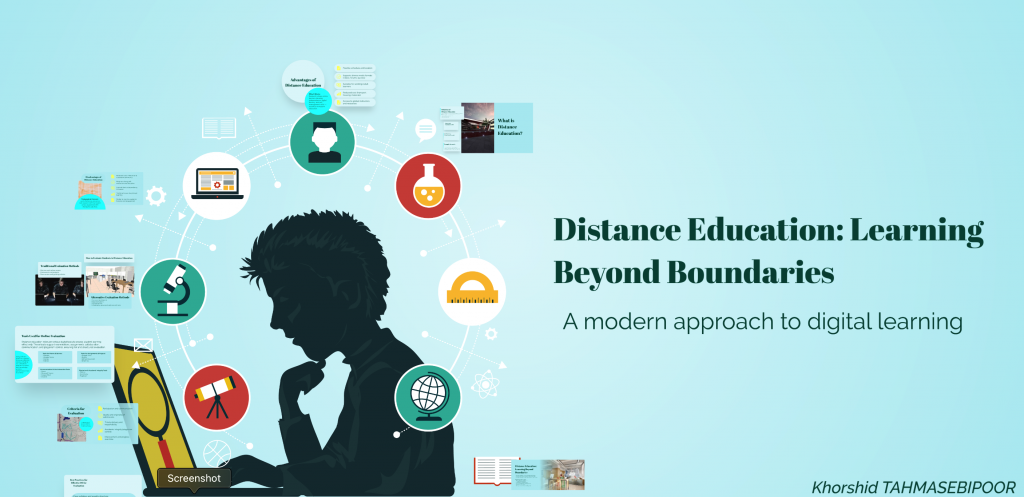
Exploring distance education, digital learning strategies, and student-centered technologies in modern education.

Welcome to my Blog!

  • Criteria for Effective Distance Education

    Effective distance education depends on several key criteria that influence learning quality and student success. One of the most important factors is instructional design. Course content should be well-organized, clearly structured, and presented in a way that is easy to navigate in an online environment.

    Interaction and communication are also critical components. Opportunities for student–instructor and student–student interaction help maintain engagement and motivation. Discussion boards, live sessions, and collaborative activities can foster a sense of community in virtual classrooms.

    Another important criterion is technological reliability. Platforms used in distance education must be user-friendly, stable, and accessible to learners with different levels of digital literacy. Technical support and clear guidance are essential for preventing disruptions.

    When these criteria are met, distance education can provide effective, engaging, and high-quality learning experiences that meet the diverse needs of modern learners.

    Also explore:

     

    What Is Distance Education?

    dijital litercay

  • Evaluating Students in Distance Education

    Evaluation is a crucial aspect of distance education, as it helps measure student learning and instructional effectiveness. In online learning environments, traditional assessment methods must often be adapted to suit digital formats and diverse learner needs.

    Common evaluation methods in distance education include online quizzes, written assignments, projects, discussion forums, and peer assessments. These tools allow instructors to assess not only students’ knowledge but also their participation, critical thinking, and collaboration skills.

    Clear assessment criteria and transparent grading systems are essential for ensuring fairness and academic integrity. Providing timely and constructive feedback helps students understand their strengths and areas for improvement, which supports continuous learning.

    When evaluation strategies are aligned with learning objectives and supported by appropriate technology, distance education can offer reliable and meaningful assessment outcomes comparable to traditional classroom settings.

  • Advantages and Disadvantages of Distance Education

    Distance education offers numerous advantages that contribute to its widespread adoption.

    One of the most important benefits is flexibility in terms of time and location. Students are able to access learning materials, lectures, and assignments according to their own schedules, which allows for personalized learning experiences.Another major advantage is accessibility. Distance education enables individuals from different geographical regions to participate in educational programs that may otherwise be unavailable to them. Additionally, digital learning environments often provide a wide range of resources, including recorded lectures, interactive content, and online discussions, which can enhance understanding and retention.

    Despite these benefits, distance education also presents several challenges. The lack of face-to-face interaction may reduce opportunities for social engagement and immediate feedback. Some students may feel isolated or struggle to stay motivated without direct classroom supervision.Technical issues such as unreliable internet connections, limited access to devices, or unfamiliarity with digital platforms can also negatively affect the learning process.

    Therefore, successful distance education requires well-designed courses, reliable technology, and strong support systems for both students and instructors.

    Explore more:

    Deeper dive into distance education

    Practical tips for succeeding in distance education

  • What Is Distance Education?


    Distance education is a form of education where teaching and learning take place without the requirement of physical presence in a traditional classroom. Communication between students and instructors is carried out through digital technologies such as learning management systems, video conferencing tools, and online platforms.

    This model of education allows learners to access content regardless of time and location. Distance education has become increasingly important due to technological advancements and global needs, offering flexible learning opportunities for students with different lifestyles and responsibilities.

    Today, distance education is widely used in universities, professional training programs, and lifelong learning initiatives.