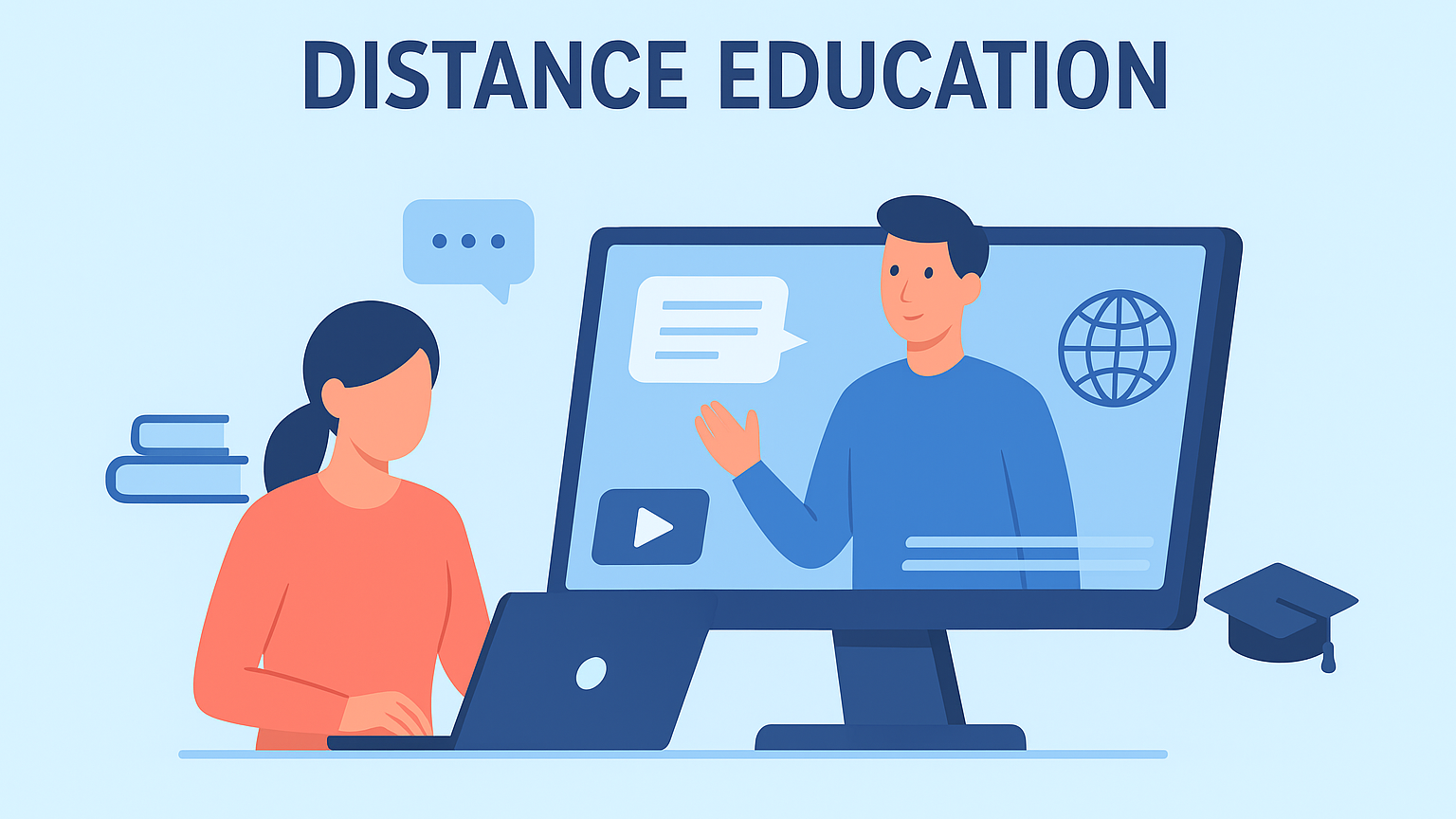
Distance Education refers to a learning and teaching process in which the instructor and the learners are not physically present in the same environment. Instead, education takes place through digital tools, online communication technologies, and virtual learning platforms. Distance Education allows students to access learning materials anytime and from anywhere, creating flexible and diverse learning opportunities.
https://meb.gov.tr/distance-education-in-lifelong-learning-courses-begins/haber/22095/en
Key Features of Distance Education
- Separation of the instructor and the learner
Teaching and learning occur in different physical locations, often at different times. - Use of technology
Tools such as Learning Management Systems (LMS), video conferencing apps (Zoom, Teams), e-content, and interactive materials support learning. - Flexible learning environment
Students can access content at their own pace and according to their own schedules. - Student-centered approach
Learners take more responsibility for their own learning process.
Types of Distance Education
- Synchronous Distance Education
Students and teachers meet online at the same time through live sessions. - Asynchronous Distance Education
Learning materials are accessible anytime, and students complete tasks at their own pace. - Hybrid / Blended Learning
A combination of online and face-to-face instruction.
Why is Distance Education Important?
Distance Education expands educational opportunities by making learning more accessible, flexible, and inclusive. It is especially valuable for:
- learners who cannot attend face-to-face classes
- adults in continuing education
- students with diverse schedules
- emergencies or unexpected situations such as pandemics
With the support of effective instructional design and technology integration, Distance Education can offer rich learning experiences comparable to traditional classrooms.
