-
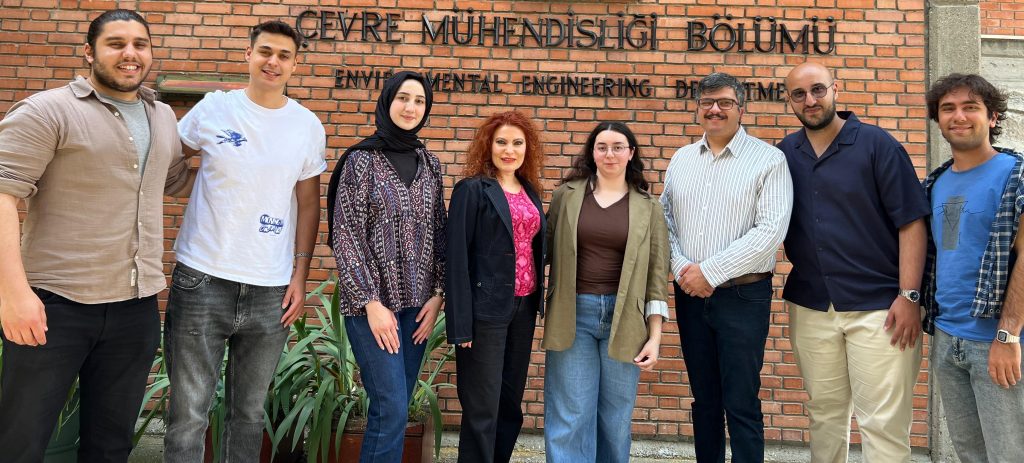
Research Group
Arsenic is one of the most hazardous heavy metals commonly found in groundwater. Globally, high arsenic concentrations affect the water supply for more than 250 million people. Although substantial leaps have been made in its treatment, arsenic remains not only a significant environmental problem but also a danger to public health. Traditional treatment methods often rely on Zero-Valent Iron (ZVI), a material well-known for its effectiveness, availability, high adsorption capacity, and relatively low cost.
In recent years, advanced materials, like graphene-based nanocomposites, have become viable substitutes. Among these, Magnetite-Reduced Graphene Oxide (MrGO) has gained a lot of attention. This garnered attention stemming from the special attributes that MrGO provides to treatment systems, enhancing, or even supplementing, traditional treatment methods.
In our research, we use MrGO in both batch and continuous column experiments to examine how well MrGO and ZVI remove various types of arsenic from water, comparing their performance and effects on the systems. We investigate how these materials interact with arsenic species, how these materials interact with each other through treatment systems, and how they might be combined for more effective removal. We strive to find a more effective, efficient, and affordable solution to the global arsenic problem, whether based on newer, more advanced, methods or through innovative and novel approaches combining older and newer solutions.