
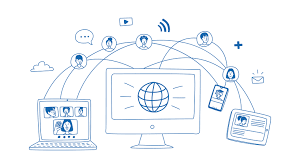
With the advancement of technology, education has moved beyond the four walls of the classroom and found a new place in the digital world. Today, “Distance Education” is not just an alternative, but a fundamental part of modern learning. So, what exactly is this system and how does it work? Here is the anatomy of distance education in 4 main points:
1. What is Distance Education?
Distance education is an educational model where the student and the teacher are not physically present in the same environment, removing the boundaries of time and space . In this model, computer technologies and the internet serve as a bridge for transferring knowledge. Unlike traditional classroom education, the learning process is conducted through virtual platforms.
2. What are the Advantages and Disadvantages?
Just like any system, distance education has two sides :
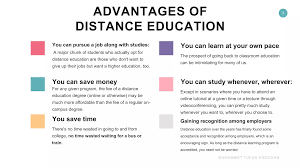
- Advantages: The biggest plus is flexibility. Students can learn at their own pace and access materials whenever they want. Additionally, it makes education more economical by eliminating costs such as transportation and accommodation.
- Disadvantages: The lack of physical interaction can lead to a sense of “social isolation.” Furthermore, technical issues (internet disconnection, etc.) and the need for high self-discipline can make the process difficult for some students.
3. How Can You Evaluate Students in Distance Education?
In the digital environment, modern methods replace paper-and-pencil exams. The evaluation process should not be limited to just exams :
- Online Quizzes: Practical tests to measure knowledge levels.
- Project-Based Assignments: Long-term work that measures the student’s research and application skills.
- Forum Discussions: Platforms that show the student’s mastery of the subject and ability to generate ideas.
- E-Portfolios: Collecting work done throughout the semester in a digital file.
4. What are the Criteria to Evaluate in Distance Education?
When evaluating a student in distance education, simply finding the “right answer” is not enough. The following criteria should be considered to measure success :
- Participation Consistency: Attendance in live classes and frequency of logging into the system.
- Time Management: Submitting assignments and tasks on time.
- Collaboration: Interaction with other students in group work and forums.
- Critical Thinking: The ability to interpret information rather than just memorizing it.
Education is no longer just in classrooms, but on our screens. Adapting to this new world is the key to the future for both learners and teachers.