Advantages of Distance Education
There are lots of pros to distance education. But we are going to share four of them. These are Flexible Learning, Breaking Down Barriers, Reducing Costs, and Transferrable Skills.
Flexible Learning
Perhaps the most immediately obvious advantage of distance education is the level of flexibility it provides for students. In general, remote learning tends to require more independent study and because modern distance education is usually online-based, students have more control over both when and where they study.
For teachers and academic institutions, modern education technology, or EdTech, offers possibilities to deliver lessons via synchronous or asynchronous methods. Examples of synchronous methods include video conferencing and digital whiteboarding, while asynchronous methods allow for the creation of a learning resource center.
The all-around flexibility on offer via distance education can make it ideal for people who have to juggle a lot of additional responsibilities, as well as those who like to study when the mood strikes, rather than when they are obligated to do so. Nevertheless, it is also possible for remote education to have structure and deadlines too.
Breaking Down Barriers
Another of the main advantages of distance education is the removal of the natural geographical barriers associated with in-person teaching methods. When equipped with the latest EdTech, academic institutions are now able to provide teaching services to almost anyone with a reliable internet connection, regardless of physical location. As a result, they have the potential to build a larger and more diverse learning community.
For students, the breaking down of these geographical barriers also offers additional learning opportunities. For instance, it is now possible for students to enroll in distance learning courses from major academic institutions in other countries. This potentially opens up a wider range of courses and a higher level of teaching.
Furthermore, distance learning also has the potential to break down barriers associated with disability. As an example, a video lesson can be edited to include subtitles for those who are hearing impaired, while written content can be made available to those who have difficulty reading via text-to-speech technology. The aforementioned flexibility can be crucial for people with certain conditions, while the lack of travel can also be advantageous.

Reducing Costs
As a general rule, distance learning courses cost academic institutions less, because lessons can be scaled up and down more easily, and because lessons can be delivered once, recorded, and re-used. In many cases, these savings are passed on to students, meaning distance learning is often more affordable than in-person courses.
This is, in and of itself, one of the most important advantages of distance education, because tuition fees are often one of the major barriers to learning, especially at the degree level and beyond. On a very basic level, reducing costs for teachers and students can help more people to access education.
On top of this, it is worth noting that distance learning can help students to save on costs associated with relocating, which is often required to attend a college or university. In fact, students may even have the ability to study while working a full-time job, which can also make course fees affordable and can help students to avoid student loan debt.

Transferable Skills
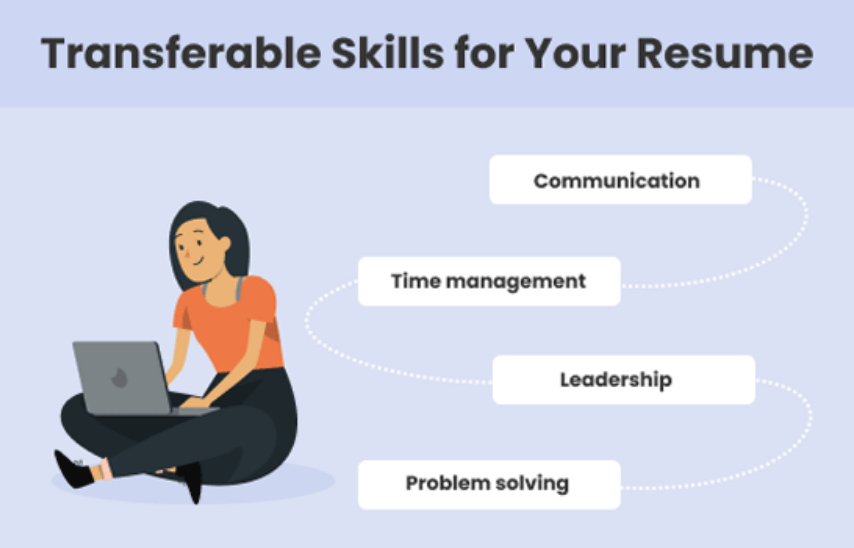
One benefit of distance learning, which is sometimes overlooked, is the opportunity to develop transferable skills. If a student is able to learn effectively using remote learning technology, they are also able to take many of those skills into working life and other areas. Some of these transferable skills include:
- Independent working
- Time management
- Self-motivation
- Research and fact-finding
- Digital communication
The development of these skills is significant, because the number of jobs that provide work-from-home opportunities is growing all the time, and, in some cases, telecommuting may even be a necessity. Moreover, employers are often impressed by candidates who have completed distance learning courses, due to the self-discipline involved.